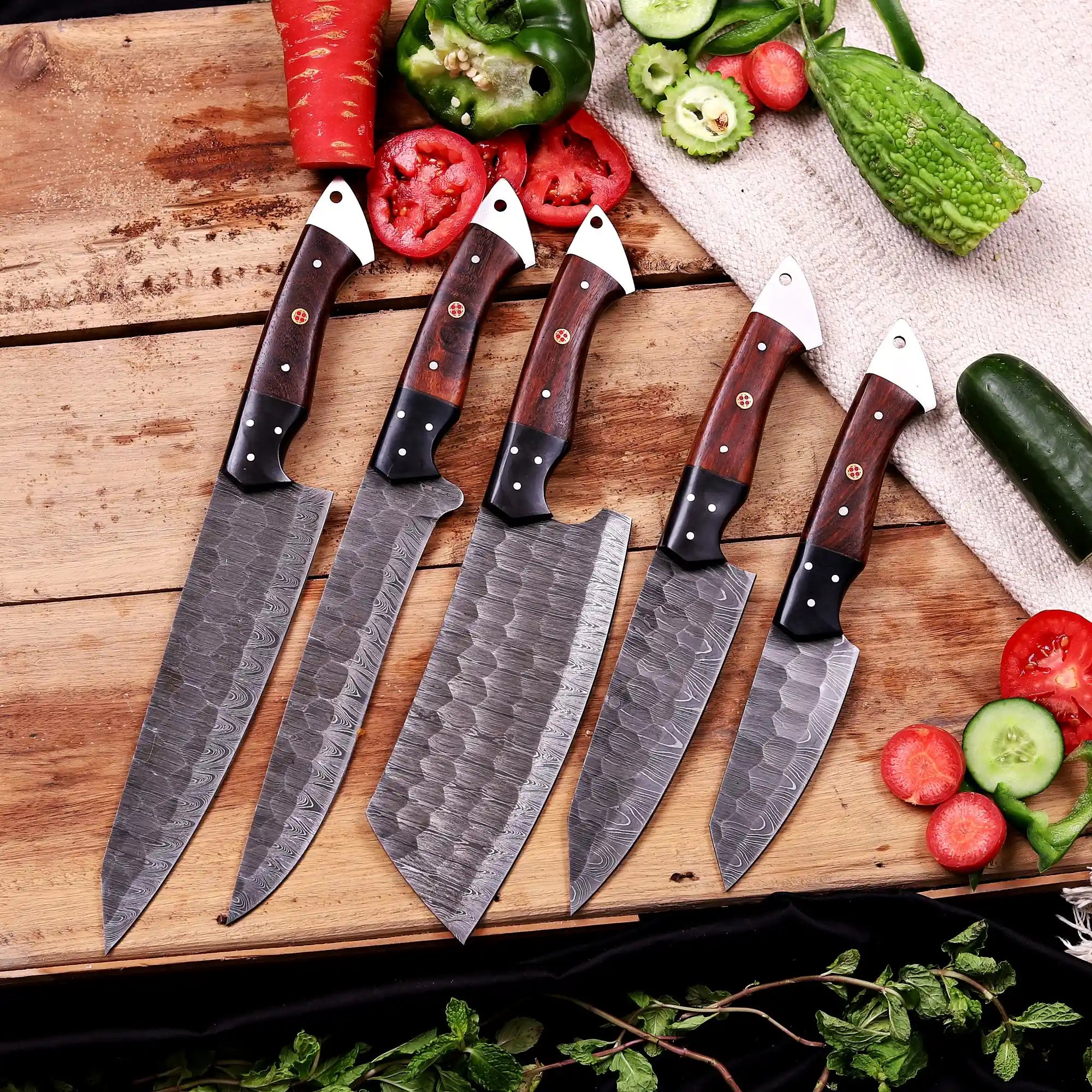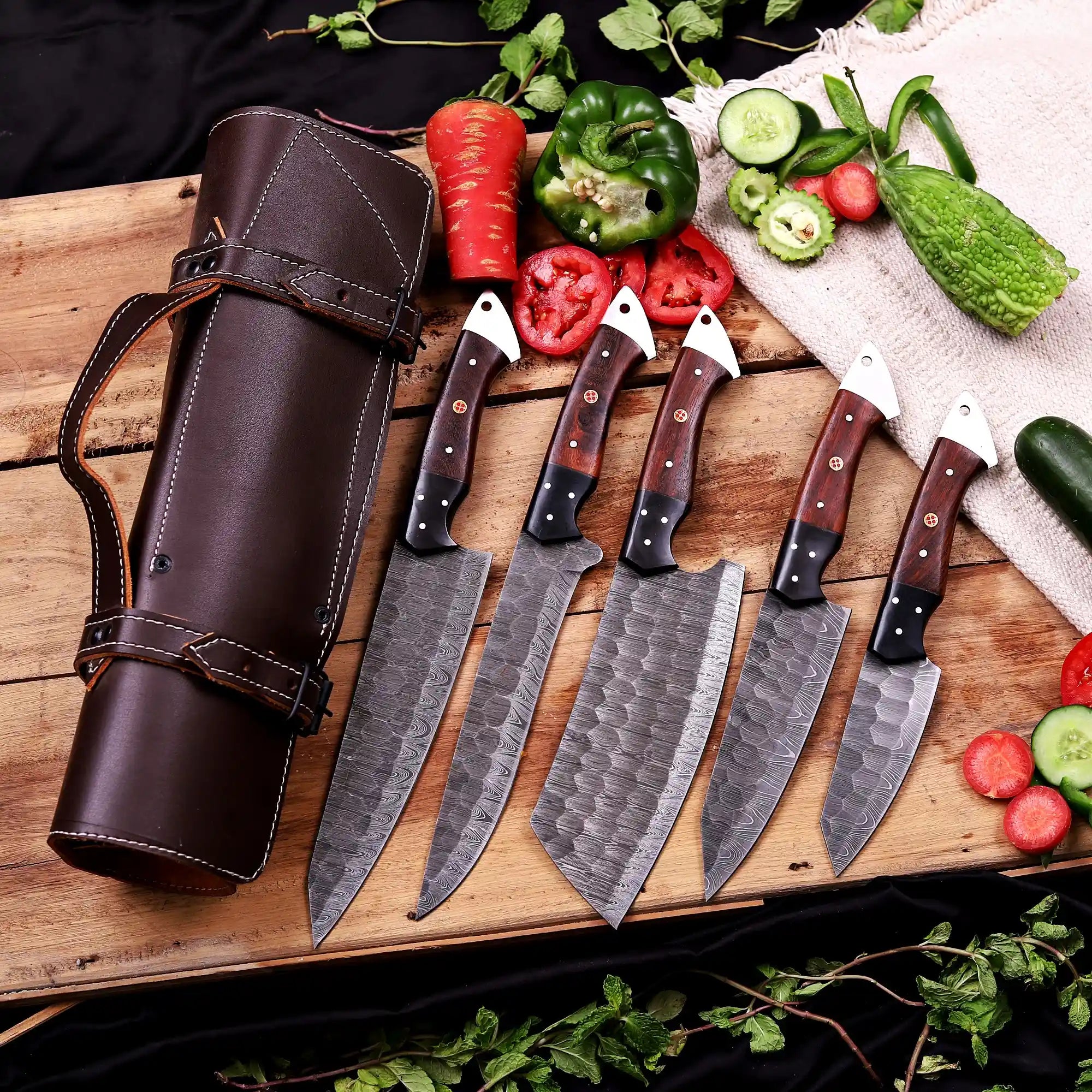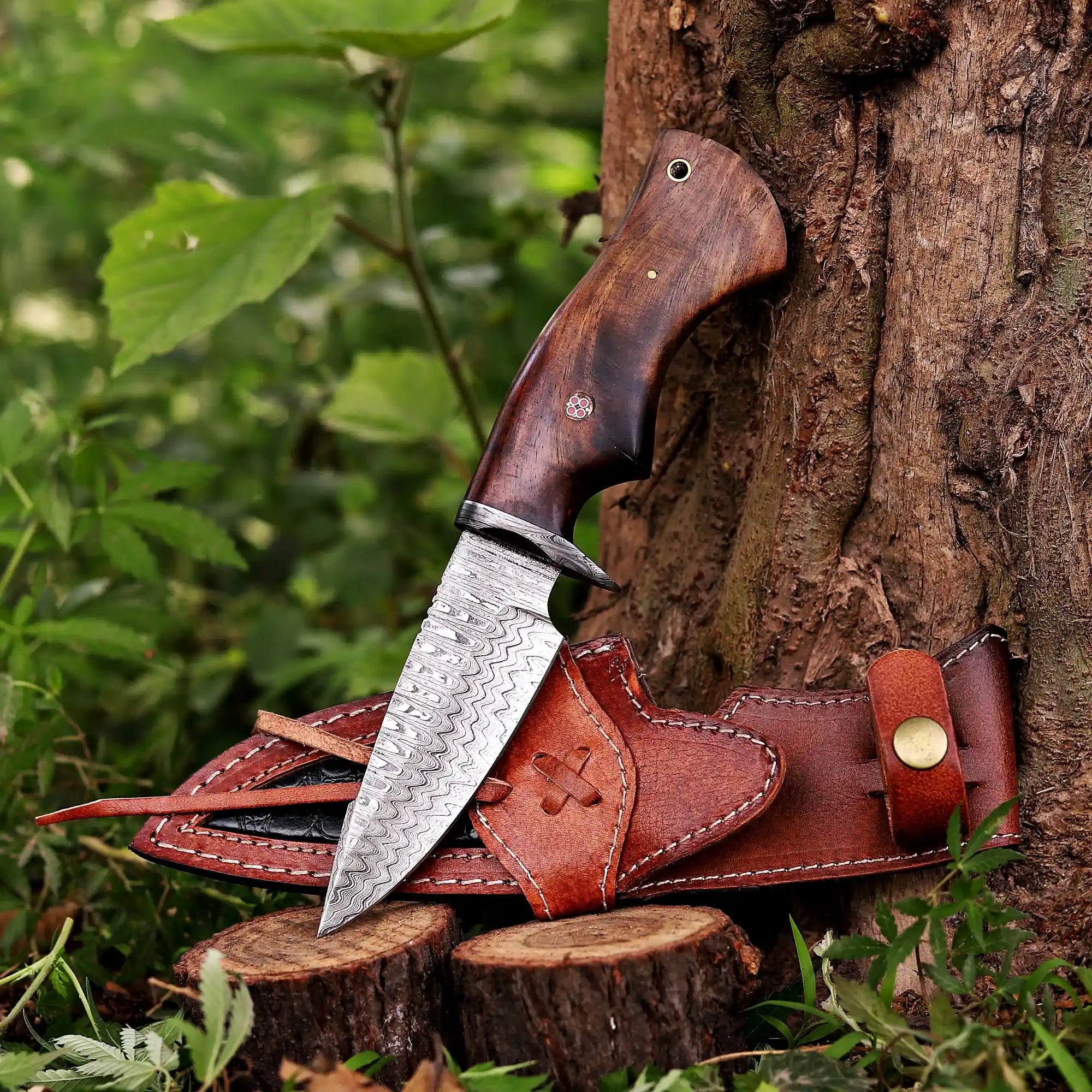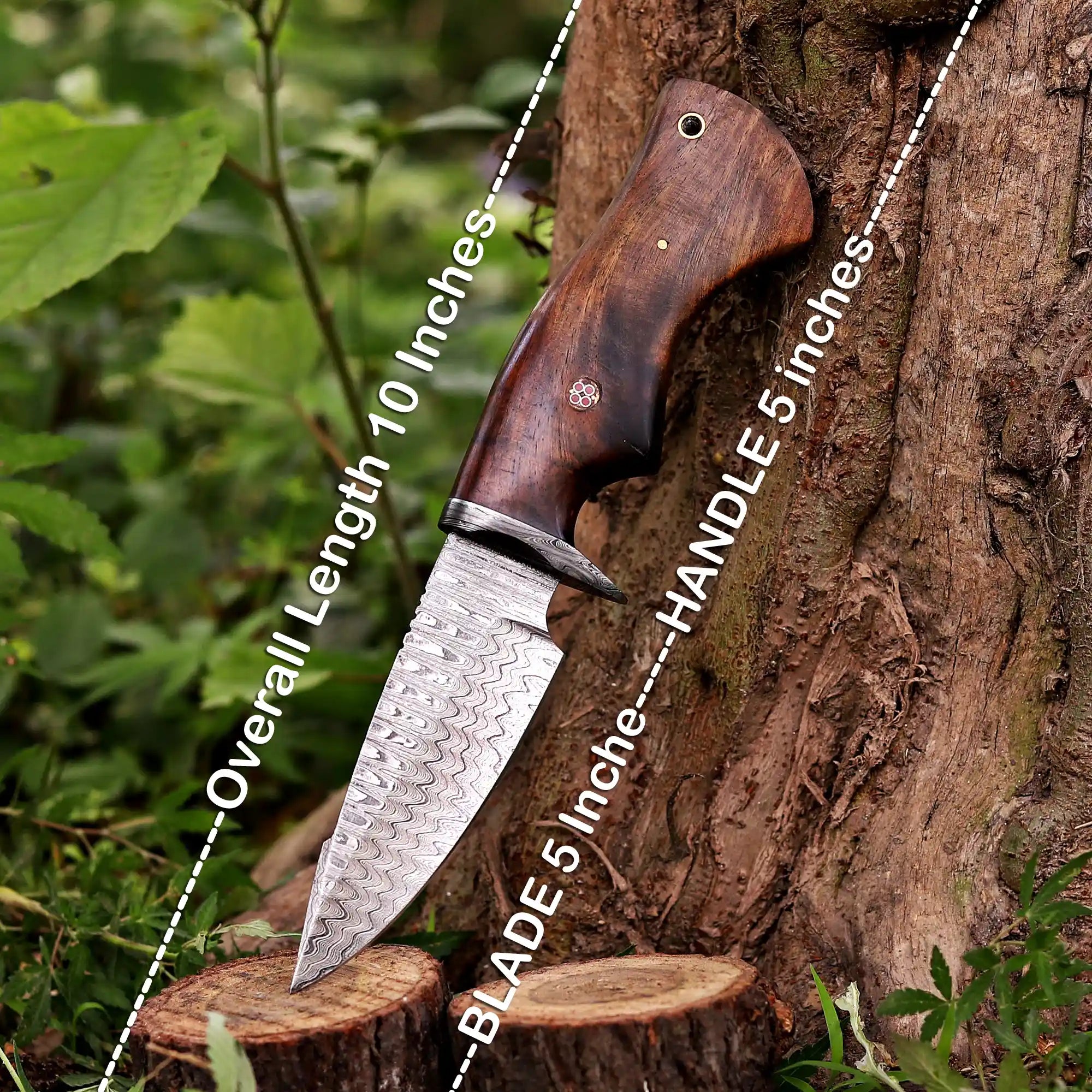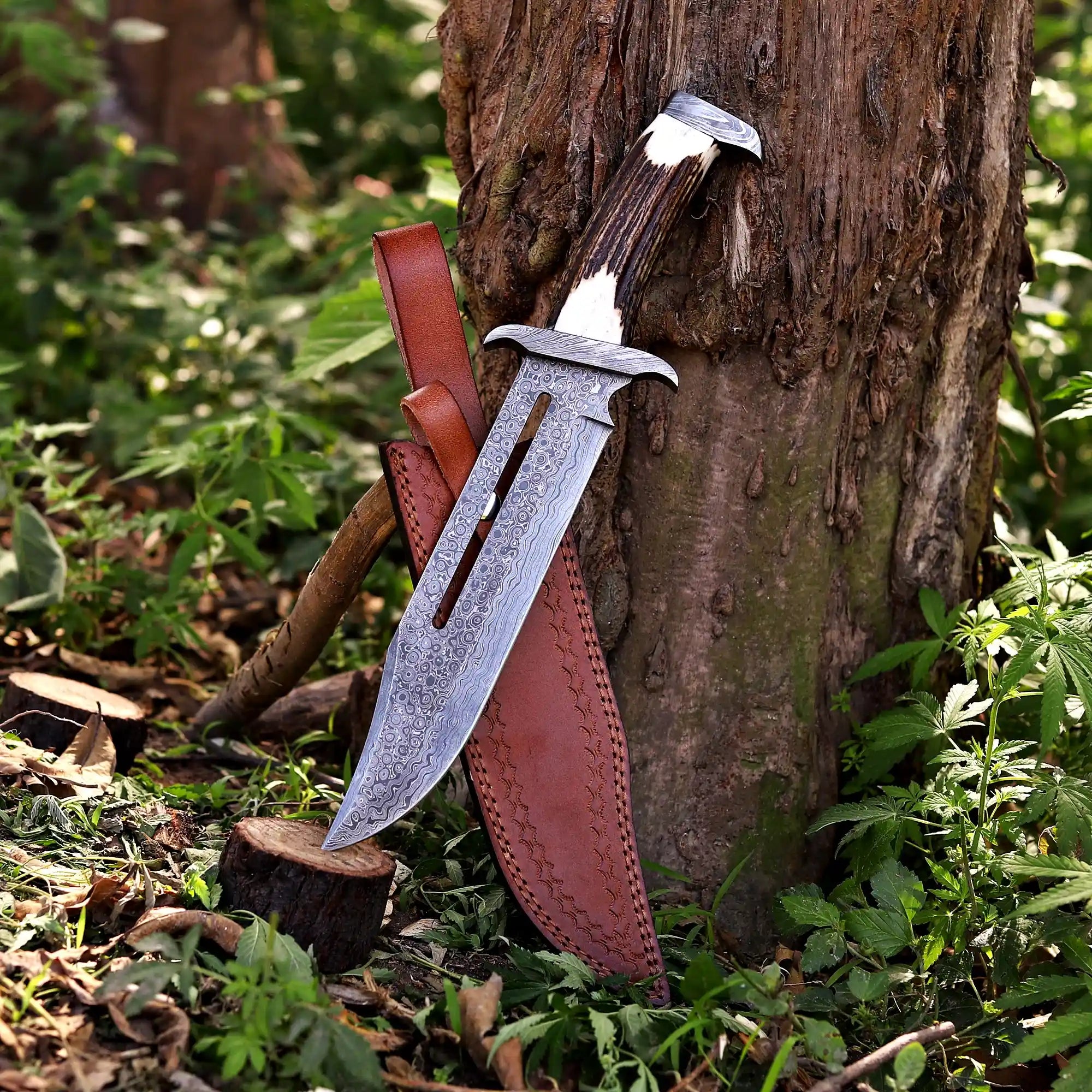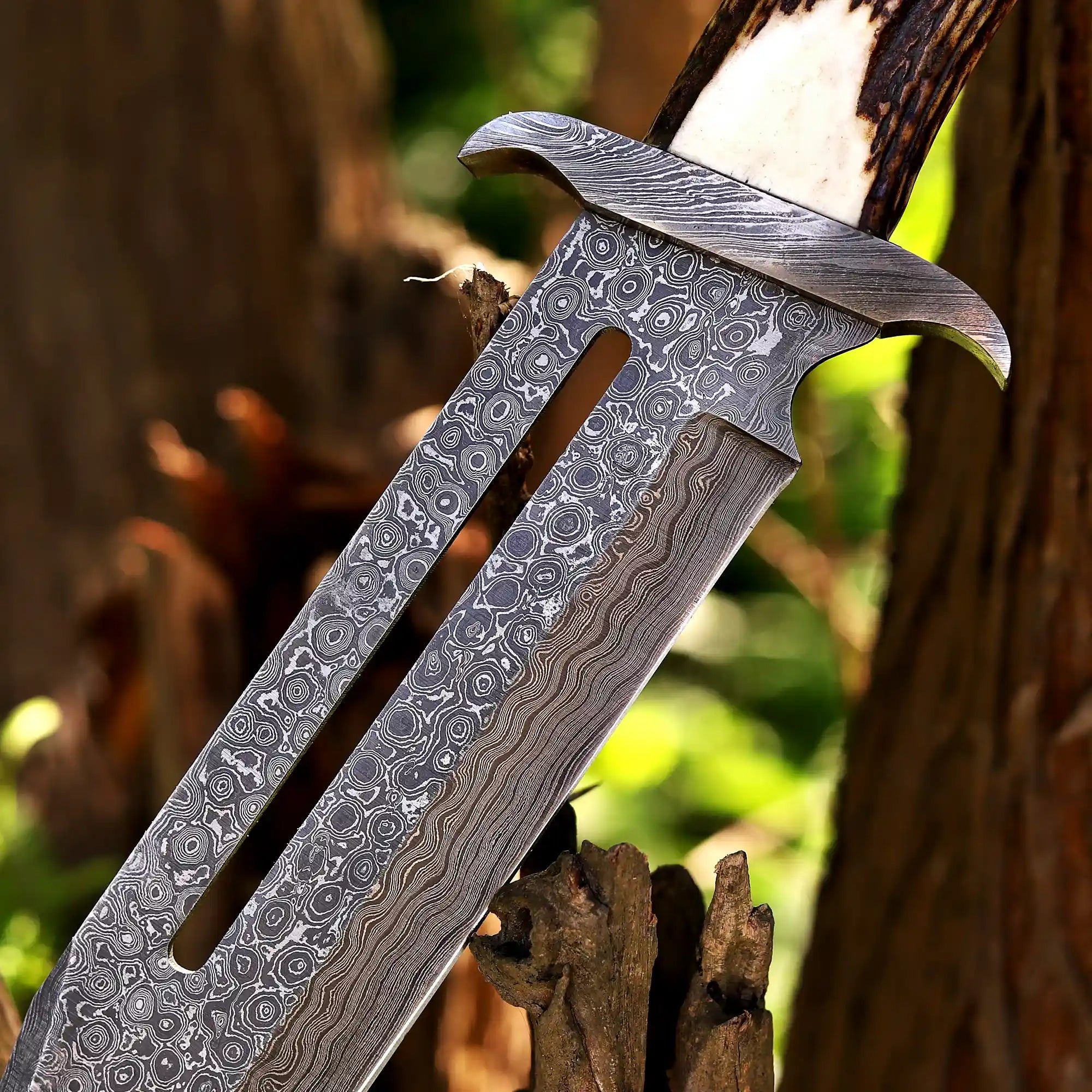

A Damascus steel knife is built to last for decades, and it can look as good in twenty years as it does on day one. The catch is that its layered high-carbon steel needs a little more attention than a stainless blade. The good news: the whole routine takes about a minute after each use.

The 4-Step Routine: Wash, Dry, Oil, Store
1. Wash by hand, right after use
Use warm water, a soft sponge, and a drop of mild dish soap. Never put a Damascus knife in the dishwasher. The heat, harsh detergent, and long exposure to moisture are the fastest way to dull the edge and spot the blade. Skip steel wool and abrasive scouring pads too, since they scratch the pattern.
2. Dry it completely
This is the step that matters most. Wipe the blade dry with a soft cloth straight away, including the area where the blade meets the handle. Moisture left on high-carbon steel is what leads to rust, so don’t leave the knife on the drying rack.
3. Add a thin coat of oil
Put a few drops of oil on a cloth and wipe a very thin film over the blade. For kitchen knives, use food-safe mineral oil. For hunting, camping, and collector knives, camellia oil or a similar light knife oil works well. A little goes a long way, and you only need to oil after cleaning or before long storage, not after every single cut.
4. Store it dry
Keep your knives in a dry place, in a knife block, on a magnetic strip, or in a roll with the blades separated. One tip many knife owners miss: don’t store a knife in its leather sheath for months at a time. Leather holds moisture and can cause rust against the blade. Use the sheath for carrying, and store the knife outside it with a light coat of oil.
Patina vs. Rust: What’s Normal?
Over time, high-carbon steel naturally darkens, especially after cutting acidic foods like onions, tomatoes, and citrus. This is called a patina. It’s a stable grey or bluish layer, it’s harmless, and many owners like the character it gives the blade.
Rust looks different: orange or reddish, and slightly rough to the touch. If you spot it, don’t panic. Rub the spot gently with a rust eraser or a very fine abrasive pad, wipe it clean, dry it, and oil the blade. Caught early, it comes off easily.
Quick Reference
| Do | Don’t |
|---|---|
| Hand wash with mild soap and warm water | Put it in the dishwasher |
| Dry the blade completely after every use | Leave it wet or on the drying rack |
| Wipe on a thin coat of food-safe or knife oil | Use steel wool or abrasive scrubbers |
| Cut on wood or plastic boards | Cut on glass, stone, or ceramic |
| Store dry, outside the sheath for long periods | Store it in a damp leather sheath |
| Wipe off acidic foods and blood promptly | Soak the knife in the sink |
Sharpening
A whetstone is the best way to sharpen a Damascus knife. Keep a steady angle of roughly 15 to 20 degrees, work both sides evenly, and finish with a few light passes on a fine grit. Avoid cheap pull-through sharpeners, which can chip the edge and leave scratches. Because quality Damascus holds its edge well, most home users only need to sharpen a few times a year.
Caring for the Handle
Wood and bone handles should never be soaked. Wipe them clean and dry them with the blade. For wood, an occasional rub of food-safe wax or mineral oil keeps it from drying out and cracking.
Looking After It Is Part of Owning It
A Damascus knife rewards the small habits: a quick wash, a thorough dry, a light coat of oil. Do that, and the blade will keep its edge and its pattern for years, and it can become a knife you pass down.
If you’re looking for your next blade, browse our handmade knife collection. Every piece is hand forged, and every one of them gets better with a little care.