
Few blades say “Viking Age” as clearly as the seax: a single-edged knife with a heavy spine and a long, tapering point. It was a kitchen knife, a work knife, and, in its larger forms, a close-range fighting blade. Here’s where it came from, how it changed, and what it means for the modern seax knives people collect and use today.

What Does “Seax” Mean?
“Seax” is the Old English word for a knife. Archaeologists use it for the larger single-edged iron knives that appear in Anglo-Saxon graves from around the seventh century. You’ll also see it spelled sax, and a large version is often called a scramasax. That last term comes from a passage in the writings of Gregory of Tours, and its exact meaning is uncertain, so many modern scholars prefer simply “long seax.”
There is even a long-standing idea that the Saxons took their name from the weapon. It can’t be proven, but it shows how closely the knife was tied to the people who carried it.
A Knife for Work and for War
Early seaxes were practical tools. Smaller examples were used for butchering, food preparation, cutting rope, and woodwork, and were worn on the belt every day. Evidence suggests that in early Anglo-Saxon society, wearing a seax was also a sign of being a free man.
Over time, some seaxes grew longer, broader, and heavier, until the biggest ones sat somewhere between a knife and a short sword. These larger blades were meant for hard cutting blows at close range, and they were carried alongside or instead of swords, especially by people who couldn’t afford a good sword.
Short Seax and Long Seax
| Type | Roughly when | Main use | Size |
|---|---|---|---|
| Short seax | Earlier medieval period | Everyday tool: butchering, food, woodwork | Up to about 14 in (35 cm) |
| Long seax | From the late 7th century | Fighting blade and status object, still used as a knife | Blades up to around 20 in (50 cm) |
Sizes varied a great deal from region to region, so treat these as rough guides.
The Famous Seax of Beagnoth
The best-known surviving seax was pulled from the River Thames near Battersea in 1857 and is now in the British Museum. It dates to the ninth or tenth century and is about 72 cm (28 in) long. The blade is decorated with inlaid copper, brass, and silver wire.
What makes it special is its inscription. It carries the only known complete example of the 28-letter Anglo-Saxon runic alphabet (the futhorc), along with the name “Beagnoth,” which may refer to its owner or its maker. It’s a reminder that a seax could be both a weapon and a work of art.
How a Seax Was Made and Carried
- Single edge, strong spine: the thick back of the blade gave strength for chopping and heavy cuts.
- Grooves (fullers): many blades had one or more grooves along their length to reduce weight.
- Tang construction: the blade’s tang was fitted into a handle of wood, bone, or horn.
- Leather sheaths: sheaths were leather, often with metal fittings, and were commonly worn horizontally across the belt.
- Decoration: wealthier owners had blades with inlaid wire patterns and decorated sheaths, such as the 10th-century seax in Aachen’s cathedral treasury, once called “Charlemagne’s hunting knife.”
The Seax Today
Modern seax knives are made for the same reasons they were centuries ago: they’re practical, good looking, and full of character. They are popular with:
- Collectors and history fans who want a blade that reflects the early medieval world
- Reenactors and Viking-themed events, as part of period kit
- Campers and bushcrafters, who appreciate the strong spine and straightforward shape
- Gift buyers looking for something meaningful and unusual
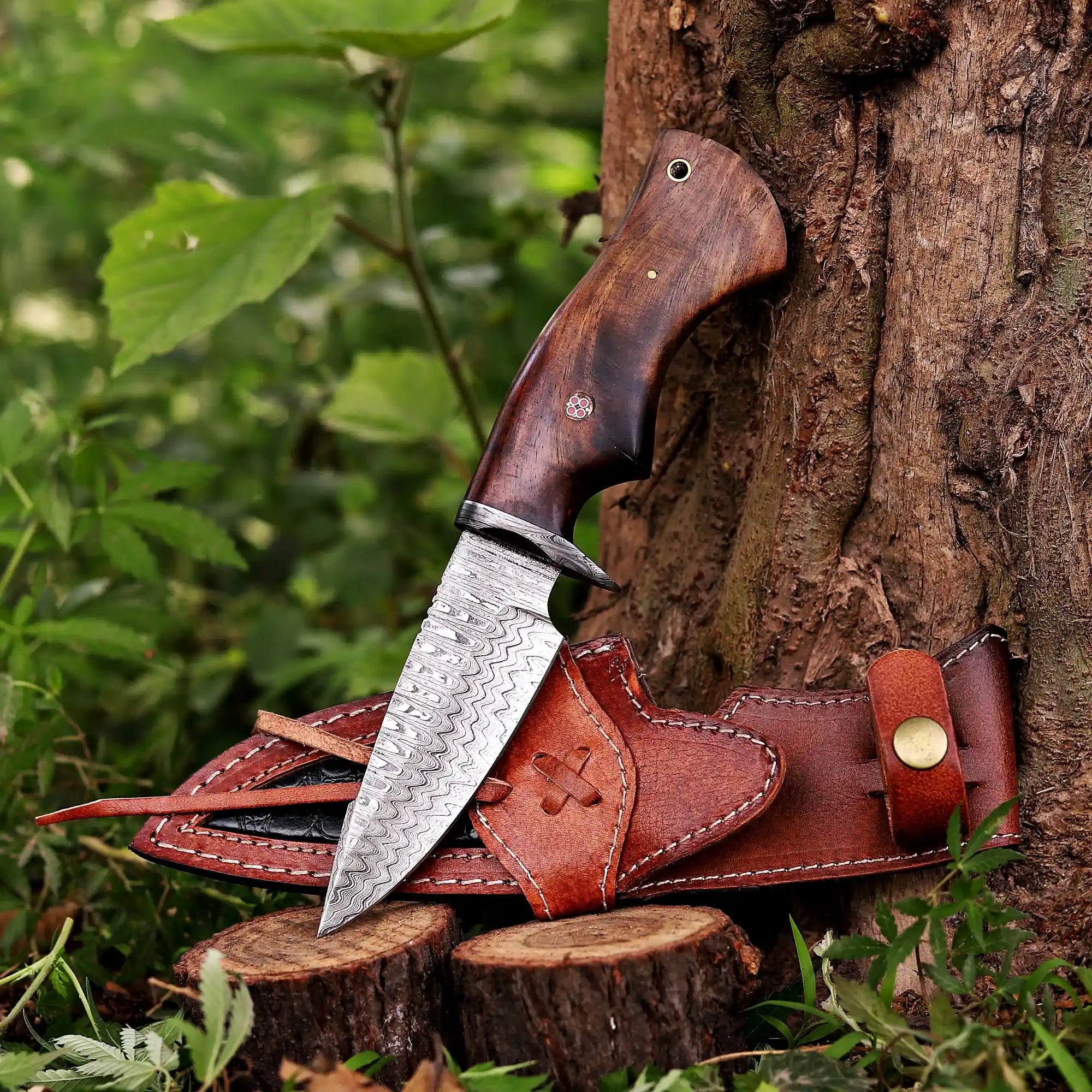
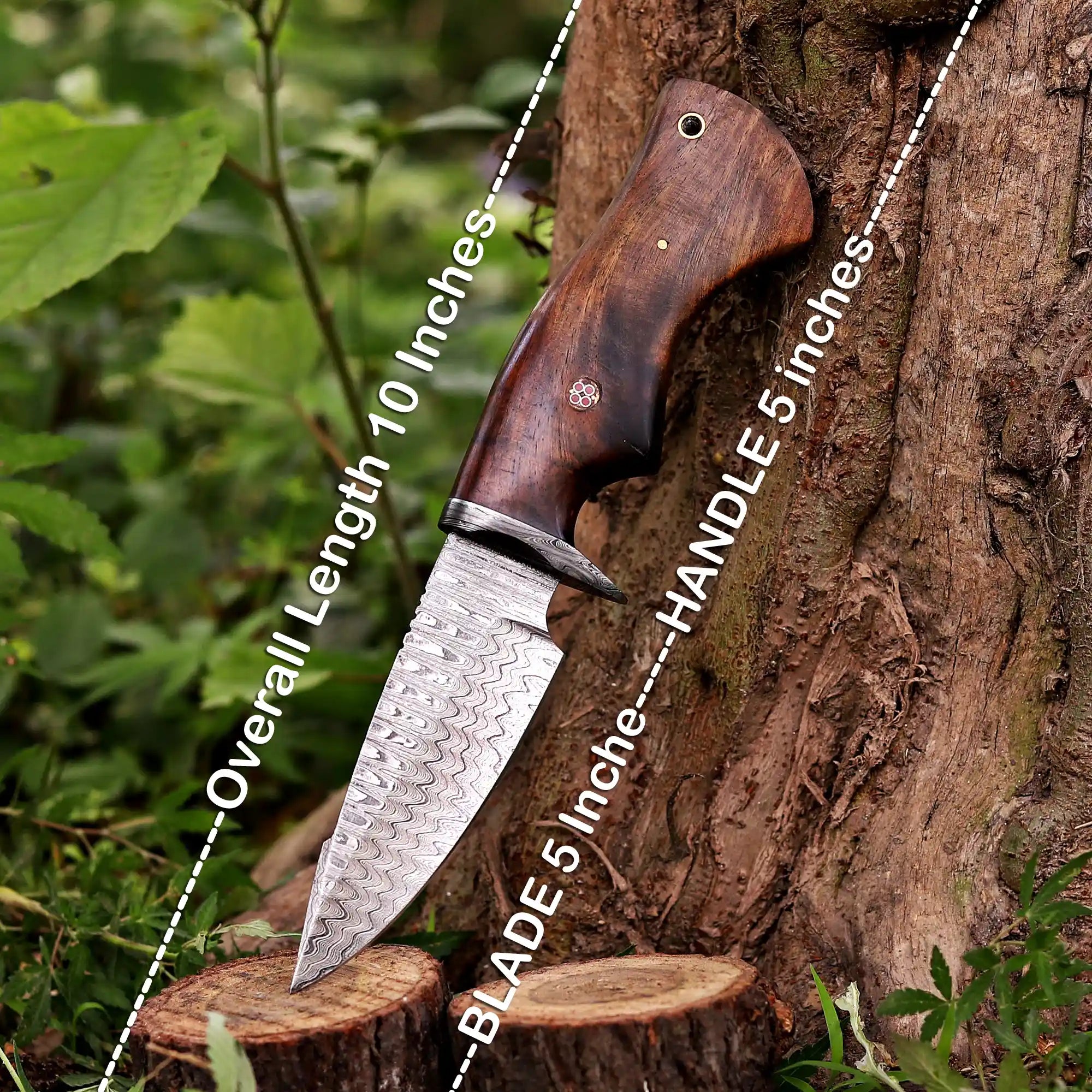
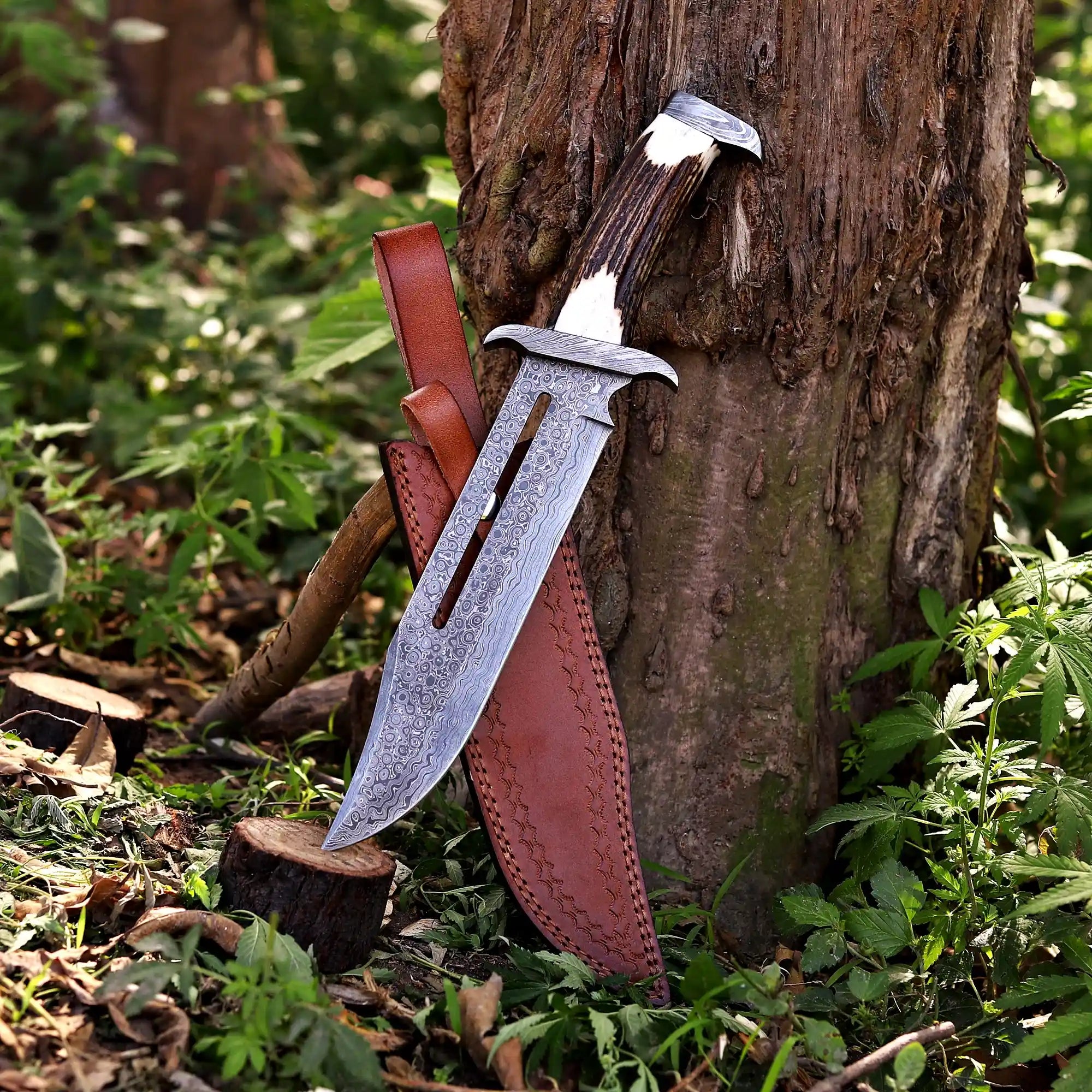
Our seax knives are modern, hand-made interpretations, not museum replicas. We pair a single-edged blade with natural handle materials such as rosewood, bone, and horn, and a leather sheath. If you like the look of a Viking seax, browse our Viking knife collection.
Caring for a Seax
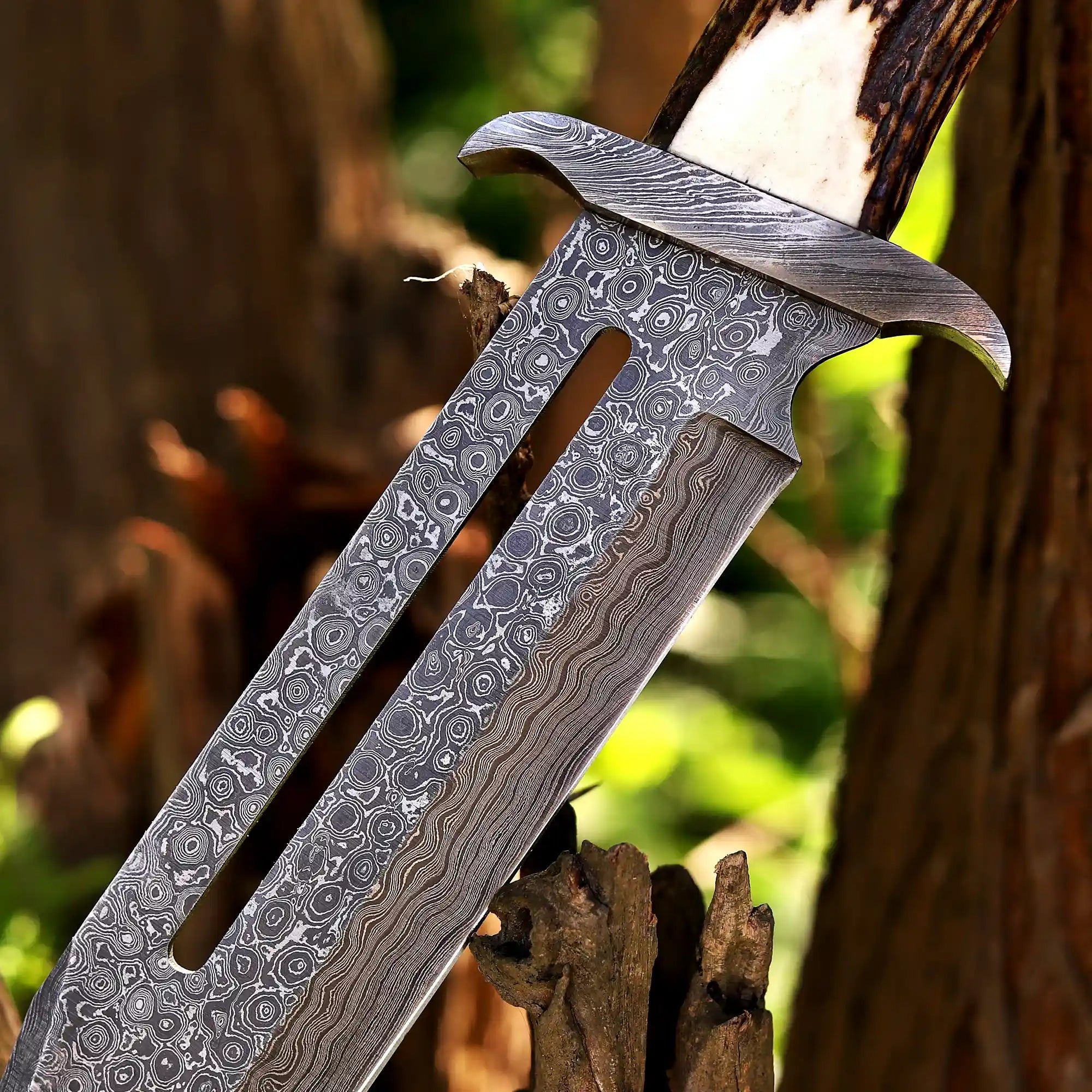
Most seax knives are made from carbon or Damascus steel, which can rust if left damp. Wipe the blade dry after use, add a light coat of oil, and keep it out of leather for long-term storage. Our knife care guide covers the full routine.
A Blade With a Long Story
For roughly a thousand years, the seax was the knife people reached for, whether they were cutting bread, carving wood, or standing in a shield wall. It’s one of the oldest and most recognizable blade shapes in Northern Europe, and it’s easy to see why people still love it.